
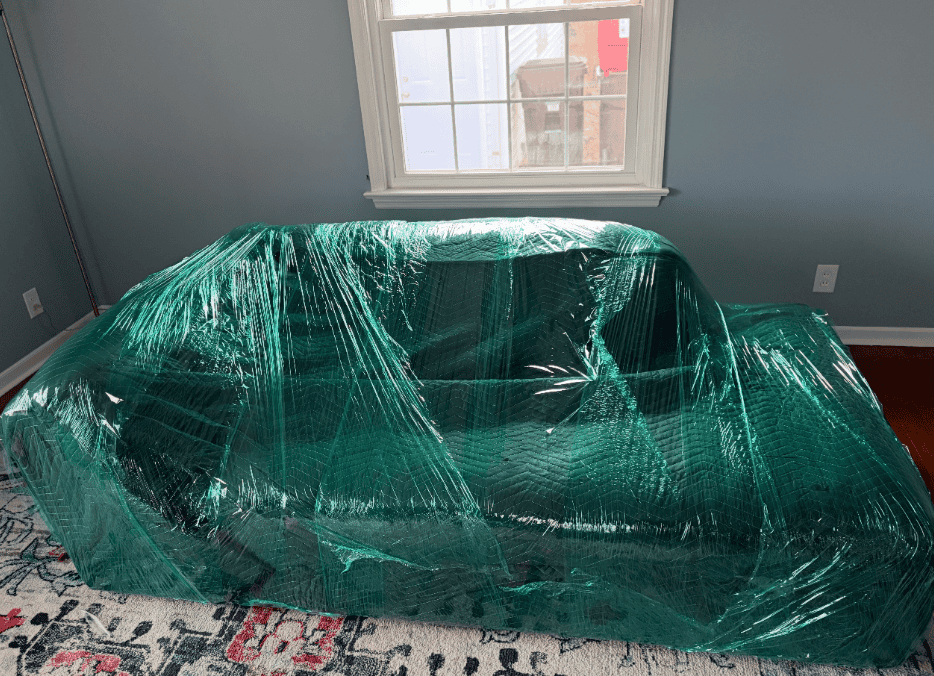
Furniture gets damaged at the doorway and on the stairs, almost never in the truck. Wrap it before it moves, take apart anything that comes apart, and clear the route before anybody lifts. Our crews are professional movers working out of an office on Washington Square, and they have carried enough sectionals down enough split-level staircases for us to say that confidently. The reviews our customers leave repeat a version of the same line, which is that heavy and awkward pieces came through three floors without a mark on a wall or a door frame. That outcome comes from preparation rather than strength. Ten minutes measuring a stairwell prevents the damage that two strong people cannot undo.
Where does furniture damage actually happen?
The pinch points are predictable. A standard interior doorway is narrower than most sofas, so the piece has to turn, and the turn is where a corner meets a jamb. Stairs add the second problem, which is that the person at the bottom carries most of the weight while walking backward with limited sight of their feet. Landings with a turn in them are harder again, because the piece has to pivot in a space that was never designed for it.
Surfaces take damage in quieter ways. A dresser dragged an inch across a hardwood floor leaves a mark that outlasts the move. Upholstery rubs against a rough brick exterior wall on the way to the truck. A table top with nothing over it collects scratches from the buckle of a strap. None of this is dramatic, and all of it shows up once the furniture is in place in the new house and the light hits it.
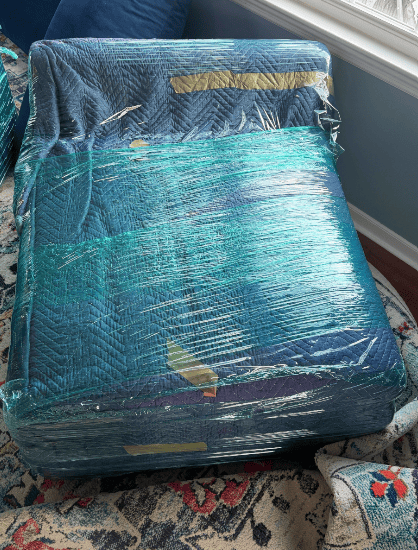
The truck itself is the safest part of the day when the load is built properly. Pieces are padded, stood upright where the shape allows, and strapped into rows so that nothing can walk forward under braking. Damage in transit is a sign of an under-filled truck rather than a rough road.
What should you do before the crew arrives?
Clearing the path matters more than anything else on this list, and it takes almost no time. Our customers who do these few things consistently get faster, cleaner moving days:
- Measure the tightest doorway and the stairwell turn, and tell us the numbers during the estimate
- Empty every drawer and cabinet, including the ones you think will be fine
- Take doors off their hinges where a piece will not otherwise clear, or ask us to
- Clear the route of rugs, shoes, plant pots, and anything else on the floor between the room and the truck
- Set aside the hardware from anything you disassemble, bagged and taped to the piece it belongs to
Weight inside a piece is the item people skip. A dresser full of clothes flexes at its joints when it tips, and drawers that slide open mid-carry turn a controlled lift into a scramble. Emptying it costs ten minutes and removes the risk entirely.
Pets and children need somewhere to be as well. A closed door, a neighbor’s house, or a room the crew is not working in all work. The hallway is the one place a move consistently goes wrong, because a crew carrying a wardrobe backward down a staircase cannot stop for a toddler.
Not sure whether your sofa or dresser will clear the doorway or the stair turn? Give us a call at (309) 274-0694, and we’ll talk through the measurements before moving day.
How should furniture be wrapped and disassembled?
Moving blankets go on before the piece leaves the room, not at the truck. Wrap the whole item, corners included, and hold the blanket with stretch wrap rather than tape, because tape against wood, leather, or a painted finish can lift it. Glass tops come off and travel separately on edge. Mirrors on dressers come off too, since they are attached with hardware meant to hold them still rather than hold them through a carry.
| Piece | Where it fails | What prevents it |
|---|---|---|
| Sofa or sectional | Corners at doorways, feet snapping | Blanket the arms, remove the legs, measure the turn |
| Dresser or chest | Joints flexing, drawers sliding open | Empty it, wrap it closed, carry it upright |
| Dining table | Top scratched, legs bent at the joint | Remove legs, wrap the top on its own, stand it on edge |
| Bed frame | Rails bowed, hardware lost | Disassemble, bag the hardware, tape the bag to a rail |
| Glass-front cabinet | Glass flexing in the frame | Empty, tape an X on the glass, blanket, then strap upright |
Anything that comes apart should come apart. A bed frame carried assembled has to clear a doorway at its full length, which usually it cannot, and forcing it bows the rails. The same applies to table legs, sofa feet, and modular shelving. Our crews carry the tools for this and will disassemble and rebuild as part of the job, which is a standard part of our residential moving work rather than something extra.
Want to know what your move costs before you commit? The in-home estimate is free, the walkthrough covers the stairwell and the doorways, and the 10% deposit that holds your date is fully refundable.
What protects the house itself?
Floors take priority, because they are the surface everything else crosses. Runners down the main path, cardboard or hardboard over hardwood, and something at the threshold where the traffic concentrates. In a Washington, IL winter, that threshold also collects salt and slush, which is its own kind of damage.
Doorframes and corners take padding or a fitted jamb protector, and banisters get wrapped on staircases where a piece has to pass close. Our crews put this down before they start carrying rather than after the first scrape, and it is the single clearest difference between a professional load-out and a DIY one. Most of the wall damage we are asked to look at came from a move where nobody protected the corner at the bottom of the stairs. Preparing the house properly is covered in more depth in prepping your home for movers, and it applies at both ends of the day.
What about heavy and awkward pieces?
Some items are a category of their own. Safes, gun cabinets, treadmills, hot tubs, upright and grand instruments, and solid-wood armoires all have weight concentrated in a way that makes a standard two-person carry unsafe. Our customers name these pieces in their reviews often enough that we plan for them as a matter of course, and our 4.9 rating from more than 545 Google reviews rests heavily on how those specific jobs went.
The right move with any of them is to say so during the estimate. Equipment, crew size, and sometimes the order of the whole day changes around one piece, and knowing about it in advance is what keeps it from becoming the problem that runs the schedule long. Attempting it alone is where people get hurt, and it sits near the top of the top 10 moving mistakes and how to avoid them for good reason.
Tell us about the awkward piece before moving day, not on it. Call (309) 274-0694 or email to book a walkthrough, and we’ll plan the crew and the equipment around it.
Related Topics: