
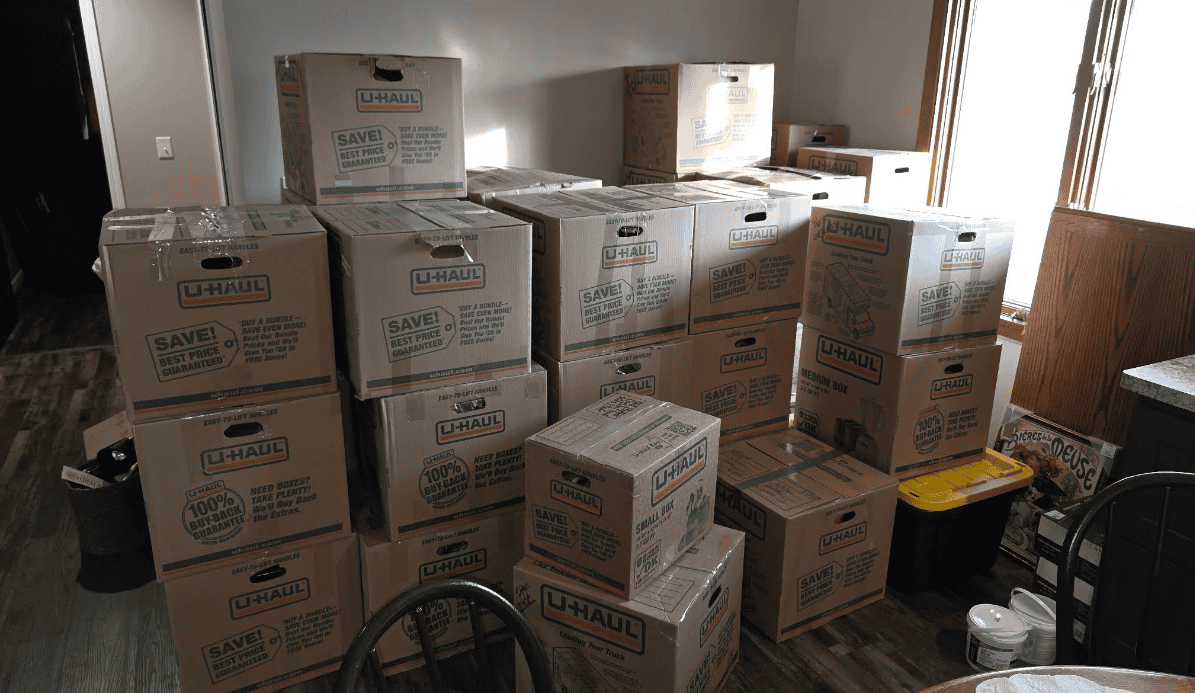
Write the destination room and two or three contents on at least three sides of every box, never only the top. A box stacked in a truck shows its sides, so a label on the lid is invisible exactly when the crew needs to read it. Labeling is the cheapest thing a household can do to speed up its own moving day, and top-quality movers based in Washington and Bloomington unload to the room written on the box, so good labels put your belongings where they belong the first time. Our crews unload to the room written on the box, which means good labels put your belongings where they belong the first time and poor ones leave you carrying boxes upstairs yourself that evening. The whole system takes a marker and about five extra seconds per box.
What should actually go on a label?
Room and contents, in that order, in letters big enough to read from across a garage. "Kitchen" on its own is not enough, because a kitchen produces twenty-five boxes and you will open all of them looking for the colander. "Kitchen, pots and baking trays" tells you whether to open it tonight or next week.
Use the name the room will have in the new house rather than the one it has now. A household moving from a two-bedroom into a three-bedroom has a room that did not exist before, and boxes marked "spare room" end up in a pile nobody can place. Walk the new house, name every room, and keep that list somewhere you can see it while packing.
Anything beyond room and contents is usually wasted effort. Detailed manifests written on the cardboard take a long time, get covered by tape, and are harder to read at a glance than three words. If you want a full inventory, number the box and keep the detail on your phone against that number.
Where on the box does the label go?
Three sides minimum, and the top as a fourth. Boxes travel stacked, and they get set down in whatever orientation the space allows, so a label that appears on only one face will spend the day hidden against a wall or another box. Writing on the sides rather than the lid also survives the moment when somebody cuts the tape.
Keep the writing in the upper third of each side. The lower portion of a box is what gets covered when it sits in a stack, and the top edge is what a crew member sees walking past a row of them. Write before you fill the box rather than after, since a flat panel takes a marker far better than a bulging one and you are less likely to skip a side when the box is still empty.
Color adds a layer that reads faster than text. A roll of colored tape or a pack of colored dots per room lets a crew sort by glance from across the room, which is quicker than reading. Put a key on the wall by the door in the new house so anybody carrying a box knows that blue means the primary bedroom. The same trick does even more work on an office moving job, where boxes get coded by desk and department so a business can be working again the next morning instead of searching.
What does a labeling system look like in practice?
Label as you seal, never in a batch at the end. Labeling after the fact means standing over forty identical closed boxes trying to remember which one took the bathroom cabinet, and the labels come out vague as a result. The habit is simple. Pack the box, write on three sides, tape it shut, move on.
Everything a household needs on a box fits into a short list.
- The destination room, named for the new house rather than the old one
- Two or three specific contents, enough to identify the box without opening it
- FRAGILE, written on every side, on any box containing breakables
- An upright arrow, for anything that must not be turned over
- OPEN FIRST, on the handful of boxes you need on the first night
- A number, if you are keeping an inventory, matched to a list on your phone
One more distinction is worth making on the box itself. Mark whether it holds things you need in the first week or things that can wait, because that decides where it gets stacked in the new house. Boxes that can wait go against a wall or into the garage, and the rooms stay usable while you work through the rest. Households already working from a plan keep this up easily, which is one reason we point people toward your Washington, IL moving checklist early in the process.
Don’t want to spend your evenings labeling forty boxes? Give us a call at (309) 274-0694, and we’ll talk through having our crew pack and label the whole house, or just the rooms you’d rather skip.
How do good labels change moving day?
They change where the time goes. An unload runs on a simple loop of truck to room and back, and every box that has to be read twice, set down in a hallway, or carried back downstairs breaks that loop. Multiply a ten-second hesitation across a hundred and twenty boxes, and it becomes real time, which on an hourly job is real money.
They also change the week after. Our customers regularly mention finishing inside the quoted window, and part of what makes that possible is a household whose boxes told the crew where to go. The rest of the benefit lands on you, since unpacking a labeled house means opening the boxes you actually need and leaving the rest until the weekend. Settling in goes faster when the first night is not a search, which is the thread running through creating a comfortable home after moving.
What do movers wish people would write?
Weight, when a box is heavier than it looks. A small box of books or canned food is one of the heaviest things in a house, and a crew member picking it up expecting a light box is how backs get hurt. "HEAVY" on the side takes a second and changes how the box gets lifted.
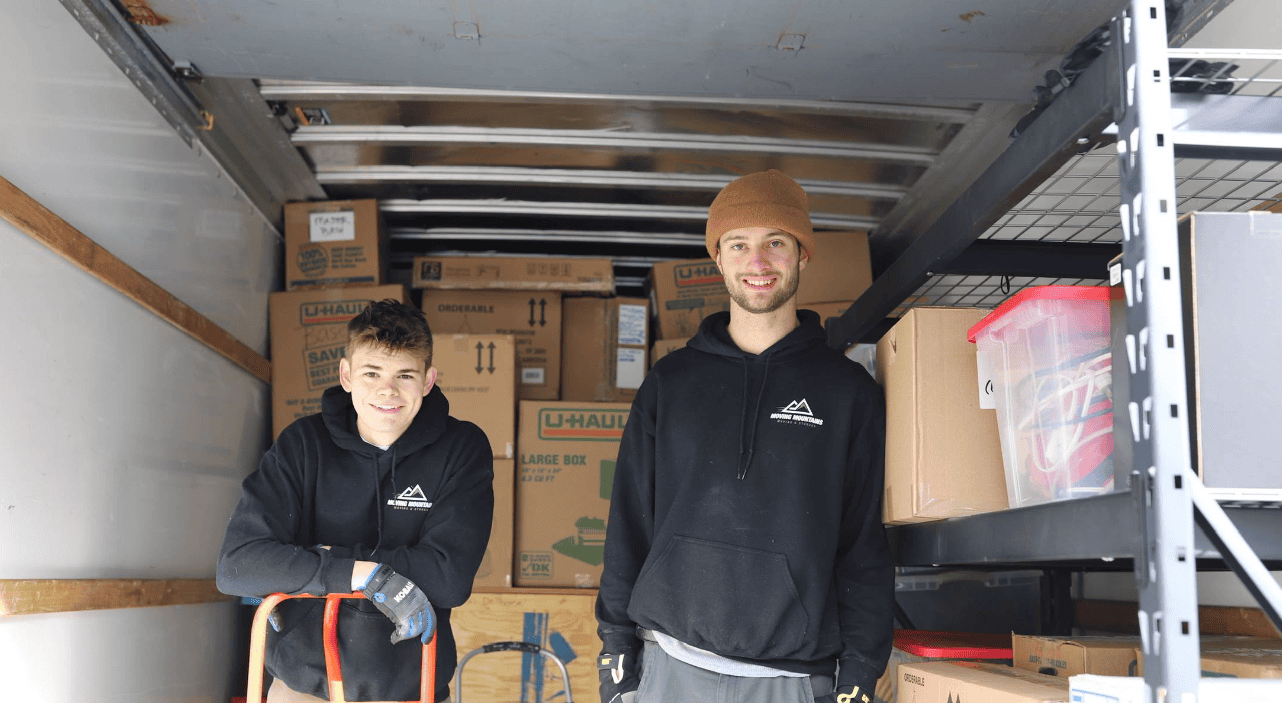
We also ask for two things to be marked clearly. One is anything with a blade or a sharp edge in it, so nobody reaches in blind at the other end. The other is anything that must stay upright. Then there is the box that should not go on the truck at all, the one with the passports, the medication, and the laptop. Write "DO NOT LOAD" on it, keep it by the front door or in your own car, and tell the crew it is there when they arrive. Our crews are trained to leave those alone, and a clear mark means nobody has to ask.
Five seconds a box on moving day saves you a weekend of searching. Call (309) 274-0694 or email, and we’ll talk through the packing and labeling plan for your house before the date is booked.
Related Topics: