
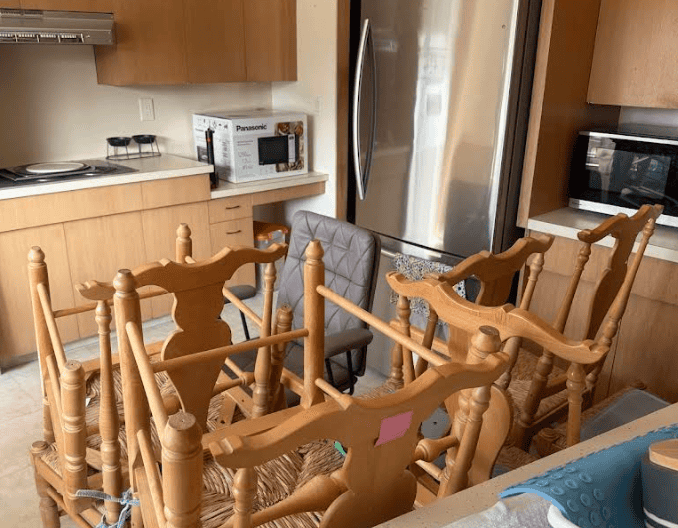
Pack the kitchen from the back of the cabinets forward, over three or four evenings, and wrap every breakable piece on its own before it goes anywhere near a box. Plates ride on edge like records rather than stacked flat, because a plate is far stronger through its rim than across its face. Reliable professional movers in Washington, IL operate from an office on Washington Square, and the kitchen draws more questions from customers than any other room in the house. It is also where a rushed final hour causes most of the breakage we get called out to look at. Our crews have loaded enough Central Illinois kitchens to know the pattern, and the fix costs nothing but a few extra days. Start with the china you use twice a year, and leave the coffee maker out until the morning of the move.
When should you start packing the kitchen?
Three to four days out suits most households, and the reason is practical rather than arbitrary. The kitchen is the last room you stop using, so boxing it two weeks early means living out of cardboard and reopening a box every time you want a saucepan. Packing it the night before means working tired, and tired packing is careless packing.
Work backward from the meals you still have to cook. Anything that will not feed you between now and move day can go straight into a box, which covers the punch bowl, the roasting pan, the second set of dishes, and the bread maker nobody has touched since spring. That sweep usually clears half the kitchen without disturbing a single thing you still need. Households that have already worked through sorting and decluttering before packing move through this stage faster, because the chipped mugs and the duplicate spatulas are already out of the house.
What stays behind is a short list: one pan, one pot, a few plates, a few glasses, a knife, a cutting board, and whatever the kids eat breakfast out of. That short list is the whole trick. Everything else can be wrapped, boxed, and stacked against the dining room wall while you carry on cooking as normal.
What supplies does a kitchen actually take?
Most people underestimate the kitchen by half. A one- or two-bedroom kitchen usually runs to twenty or thirty boxes once the pantry and the small appliances are counted, and a kitchen belonging to somebody who cooks seriously can reach forty. Buying short is the common mistake, because a half-filled box gets topped up with something heavy and the whole thing collapses on the stairs.
Paper matters more than bubble wrap. Plain newsprint wraps cleanly, holds a fold and leaves no ink on a white plate, and it doubles as the padding that fills the gaps. Keep dish towels, oven mitts, and cloth napkins out of the donation pile as well, since they make excellent cushioning and they have to travel anyway.
| Box type | What goes in it | Rough count |
|---|---|---|
| Small box | Dishes, canned goods, jars, cookbooks | 8 to 12 |
| Medium box | Pots, pans, small appliances, plastics | 4 to 6 |
| Dish pack (double walled) | Stemware, china, glass bowls, anything thin | 2 to 4 |
| Open-first box | One pan, plates, mugs, coffee maker, a knife | 1 |
Tape is the other place to spend rather than save. A kitchen box carries more weight per cubic foot than almost anything else in the house, so run tape along the center seam and across both edges on the bottom of every box before you fill it.
How do you pack plates, bowls, and glassware so nothing breaks?
Plates stand on edge. Wrap each one on its own in two sheets of paper, folding the corners in as you go, then set them upright in a row down the length of the box with a thick pad of crumpled paper underneath. Stacked flat, the weight of eight plates lands on the face of the bottom one, and that is where cracks start. Standing on edge, each plate carries its own load through the rim.
Glasses go in upright, never on their sides and never nested. Push a half sheet of paper into the bowl of each glass so it holds its shape, wrap the outside, and stand them in a single layer with paper packed into every gap between them. Stemware wants a wrap around the stem before the wrap around the glass, and it belongs in a dish pack with cell dividers if you have them. Heavy tumblers sit on the bottom layer, thin glasses on the top.
The test is the same for every box in the room. Lift it, tilt it gently, and listen. If anything shifts or clicks, the box is not finished, and the fix is more paper rather than a more careful driver. Our crews check this by hand on loading day and will add padding to a customer-packed box before it goes on the truck, because a box that rattles in the kitchen will rattle harder on the road.
What happens with appliances, knives and the pantry?
Small appliances travel best in their own boxes with the cords wrapped and taped to the body, and with any removable part- a blender jar, a food processor blade, a toaster tray- wrapped separately and packed alongside. Large appliances need preparation rather than packing. A refrigerator should be emptied, defrosted, and left to dry with the door propped open for a day, and a washer needs its drum secured before it moves anywhere.
Knives are a safety problem rather than a breakage problem. Slide each blade into a folded sheet of cardboard, tape it shut, then bundle the lot together and mark the outside clearly so nobody reaches into a box blind on the other end. Knife blocks travel fine with the knives still seated, taped across the top.
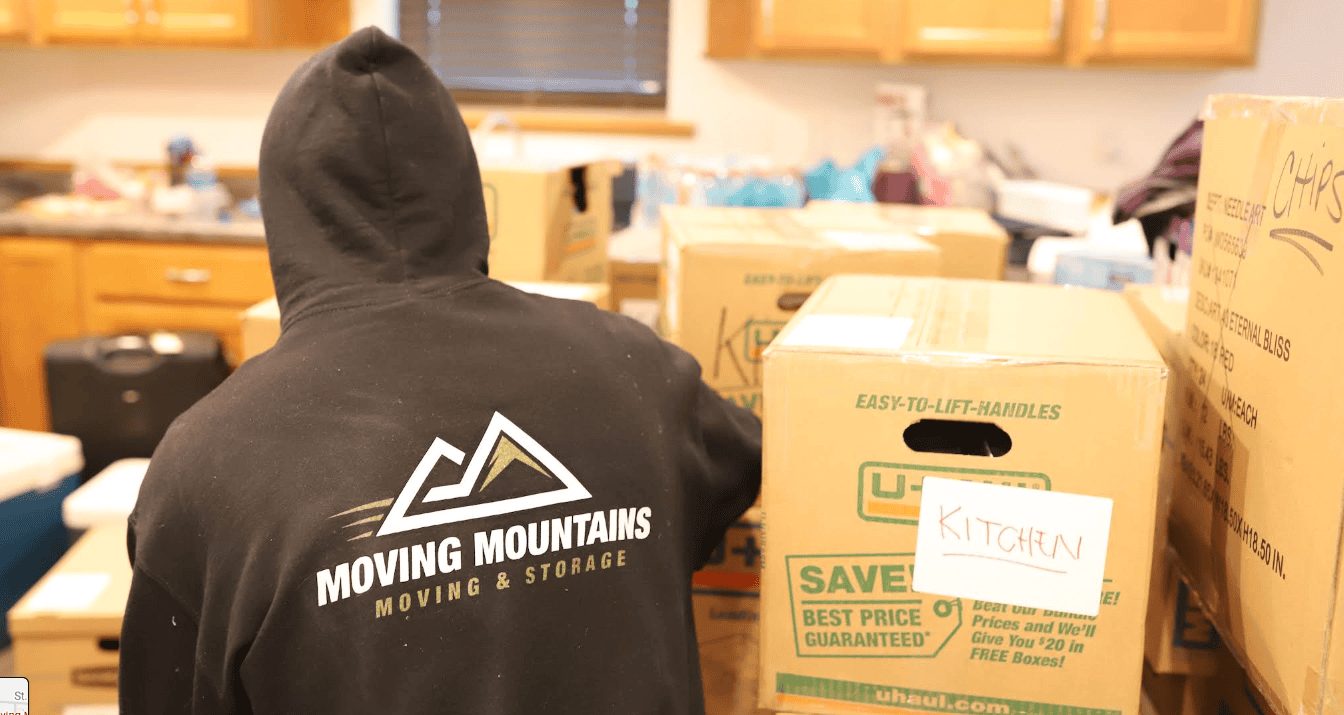
The pantry divides cleanly. Sealed dry goods travel well, so long as anything in a bag goes inside a sealed plastic bag of its own. Open bags of flour, half-used oils, and anything glass and liquid are worth eating, giving away, or throwing out. Perishables and anything from the fridge do not go on the truck at all, which is worth planning around before the week of the move.
Not sure how many boxes your kitchen will really take, or whether to hand it over? Give us a call at (309) 274-0694, and we’ll count the cabinets with you and tell you what the packing adds before you commit.
What should stay out until the last morning?
One box, marked so it cannot be missed, rides in your own car rather than the truck. Into it goes the coffee maker and whatever it needs, a pan, a few plates and glasses, cutlery for the household, a sharp knife, dish soap, a roll of paper towels and a handful of cleaning cloths. That box turns the first night in the new house from a takeout container on the floor into a normal evening.
Working out the order for the rest of the house is a separate exercise, and what to pack first when moving sets out that sequence room by room. Add the things that are painful to replace at ten o’clock at night in an unfamiliar town: a can opener, a bottle opener, salt, the kettle, a couple of mugs. Households moving with small children usually add the blender or the bottle warmer to this list without being told. The box costs you ten minutes on the last morning and saves an hour of digging through a stack of identical cardboard.
When is it worth handing the kitchen over?
A kitchen takes most people a full day of real work, spread across several evenings, and it is the room where that effort most often goes wrong. Customers who hand us one room almost always hand us this one, and handle their own bedrooms and closets, which keeps the cost down while putting the fragile work in trained hands. Our crews pack the room in materials we bring with us, and the same people who wrap the glassware are the ones who load it, so nothing changes hands in between.
Professional packing and unpacking services are also worth taking when the schedule is tight, or the household is short-handed. A closing date that moved, a job that starts on the Monday, a parent downsizing out of a house they have cooked in for forty years: those are the situations where the kitchen becomes the bottleneck. Our customers routinely name the crew members who handled their move in their reviews, and the pattern across our 4.9 rating from more than 545 of them is the same, which is careful handling of the things people were most worried about.
Frequently Asked Questions
How long does packing a kitchen take? +
Most households need a full day of work, which is usually spread across three or four evenings. A large kitchen with a lot of glassware or cast iron can take longer. Packing over several shorter sessions produces better results than one long push, because the fragile work suffers most when you are tired.
How many boxes does a kitchen need?+
Plan on twenty to thirty boxes for a one- or two-bedroom kitchen, and thirty to forty-five if you cook seriously or collect glassware. Inside that total, expect eight to twelve small boxes for dishes and canned goods, four to six medium boxes for pots and appliances, and two to four dish packs for anything thin-walled.
Can you pack dishes in newspaper?+
Plain newsprint works and is what our crews carry. Printed newspaper also works, but the ink transfers onto white china and light-colored ceramics, which means washing everything again at the other end. If printed paper is what you have, use it on the outer layer only and keep plain paper against the dish itself.
What should not go on the moving truck from a kitchen?+
Perishable food, anything from the fridge or freezer, open liquids, aerosol cans, lighter fluid, and propane canisters all stay off the truck. Sealed dry goods are fine. If you are unsure about something in the pantry, ask during the estimate rather than on loading day.
Do I have to empty the kitchen before the crew arrives?+
No. We can pack the room for you as part of the booking, or load boxes you have packed yourself, or do a mix of the two. Tell us which during the estimate so the time and the materials are accounted for in the quote rather than added on the day.
Contact Us
Phone: (309) 274-0694
Address: 135 Washington Square, Washington, IL 61571, United States
Hours:
- Monday to Friday, 8:00 AM to 5:00 PM.
- Saturday, 9:00 AM to 4:00 PM.
Have a question? Contact us, we would love to help you out!
Related Topics: